Energy Management
Advancing energy efficiency and clean energy toward a Net Zero future
Energy ManagementMateriality Level : High

Targets and Performance
| Indicator | Long-term Target 2030 |
Target 2025 |
Performance 2025 |
|---|---|---|---|
| Share of renewable energy in total energy use in office areas | At least 70% |
At least 30% |
30.1% |
| Installed renewable energy capacity within the industrial estate (MWp) | More than 50 MWp |
More than 25 MWp |
33.9 MWp |
| Share of renewable energy in total energy use in tap water production and treatment systems | At least 50% |
- | - |
| Share of electric vehicles in total organizational fleet | 100% | - | - |
Risks and Opportunities
Industrial estates consume large amounts of energy — from both operators' activities and the Company's central utility services such as electricity, water production and distribution, and wastewater treatment. Energy management is therefore a key issue directly linked to operating costs, service reliability, and the long-term competitiveness of the industrial estate. If not managed appropriately, it may lead to higher costs, energy security risks, and reduced energy-use efficiency.
However, by elevating energy management in line with sustainability and operators' expectations, Pinthong Industrial Estate can create added value through green utility infrastructure, the application of digital technology to control and improve energy efficiency, reduction of system losses, and support for renewable and clean energy. This not only reduces operating costs and greenhouse gas emissions but also strengthens the ability to attract low-carbon-focused operators, accommodate future industries, respond to responsible investment trends, and continuously enhance the industrial estate's competitiveness.
Strategy and Management
The Company recognizes the importance of energy management as a core mechanism for addressing environmental and climate change impacts — particularly indirect greenhouse gas emissions from purchased energy (Scope 2), which is a significant source for business operations. The Company has therefore established the Environmental and Climate Change Management Policy as a framework to raise energy-use efficiency, alongside responsible resource use and reduced overall environmental impact — guided by principles of efficient energy use, continuous improvement, and value-chain integration.
The approach covers controlling and reducing unnecessary energy use, improving the efficiency of systems and equipment, applying energy-saving technology, promoting appropriate renewable or alternative energy, and evaluating investments and procurement choices based on energy efficiency — in order to tangibly reduce Scope 2 greenhouse gas emissions. The Company requires continuous monitoring, verification, and evaluation of energy use and GHG emissions to ensure efficient, continuous management aligned with relevant standards, and communicates policies and practices through training, meetings, and appropriate channels to directors, executives, employees, business representatives, partners, and stakeholders for systematic implementation across the organization.

Governance Structure
| Responsible Party | Roles and Responsibilities |
|---|---|
| Board of Directors | Oversees and approves the Company's energy management policies, frameworks, and direction, and ensures appropriate systems and resources to support long-term energy and climate change operations. |
| Corporate Governance and Sustainability Committee | Oversees, monitors, and reviews energy operations to align with corporate policies and goals; considers plans, targets, and performance on energy and GHG emissions; and monitors related risks and opportunities before reporting and providing input to the Board of Directors. |
| Corporate Governance and Sustainability Working Group | Drives and integrates the Company's energy operations by collecting and analyzing energy-use data, preparing and monitoring plans or measures to improve energy efficiency and reduce GHG emissions, coordinating with relevant units, tracking progress, and regularly reporting to management and relevant committees. |
| Energy Management Unit | Operates and supports energy management at the operational level; systematically collects, tracks, analyzes, and reports corporate energy-use data; prepares reports comparing performance against targets; monitors and evaluates energy measures and projects; coordinates with relevant units on efficiency improvements; proposes corrective actions when performance falls short; and promotes employee participation in efficient, sustainable energy use. |
Energy Management Guidelines for Area Energy Units
Organizational Energy Consumption
We systematically monitor and record energy consumption data by energy type and core organizational activities to evaluate energy efficiency and identify improvement opportunities. Details of energy consumption in 2025 are shown in the table below.
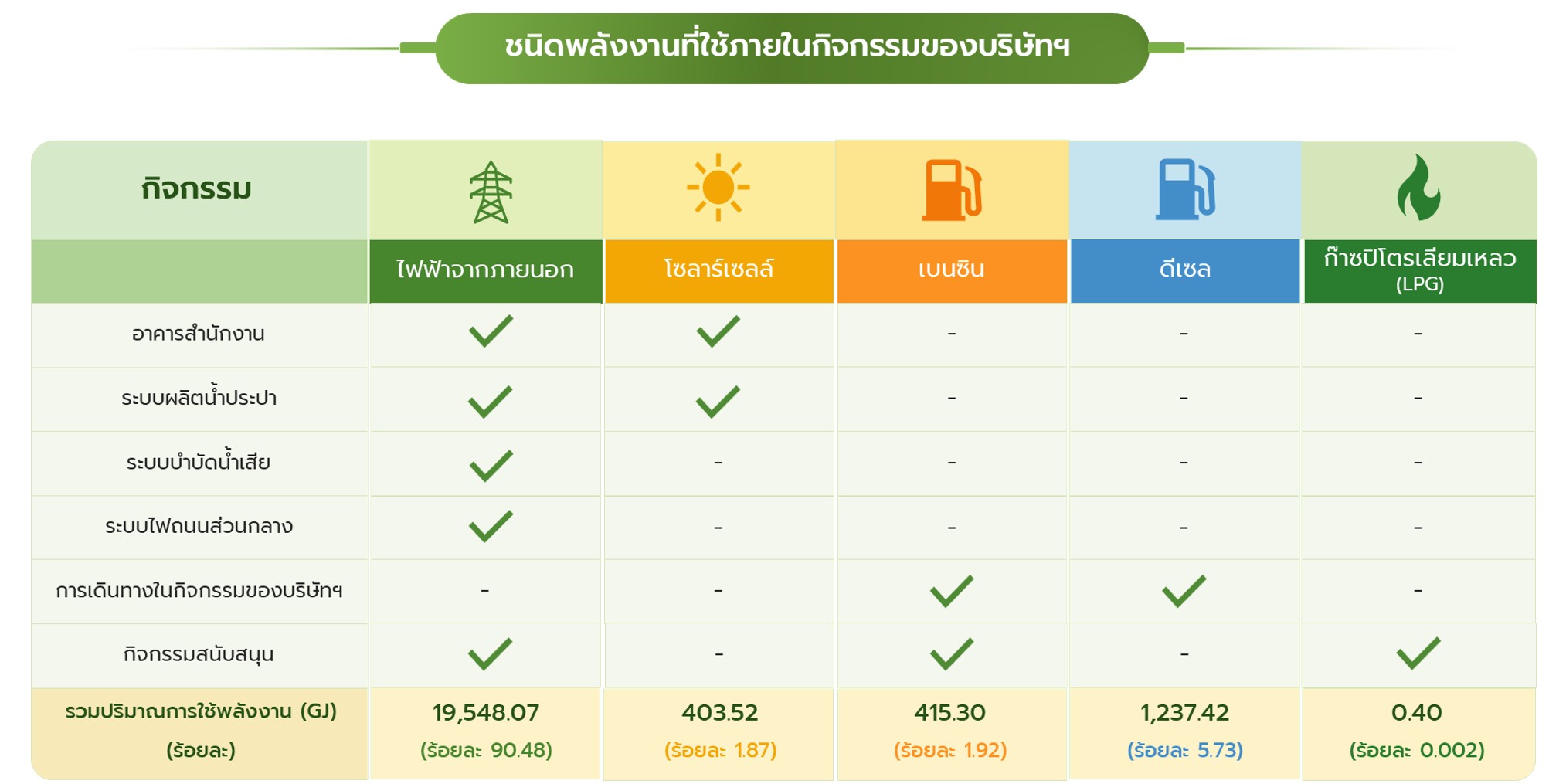
Note : Energy calculations in gigajoules reference Conversion Factors per the Department of Alternative Energy Development and Efficiency guidelines, covering only operations under the Company's operational control.
Breaking down organizational energy use by type, the Company consumed 21,201.18 GJ from non-renewable sources, equivalent to 98.13% of total energy. Purchased electricity is the primary source at 19,548.07 GJ (90.48%). Next are diesel, gasoline, and solar energy at 5.73%, 1.92%, and 1.87% respectively. LPG accounts for only 0.40 GJ, or approximately 0.002% of total energy use. This structure shows that the Company remains dependent on purchased electricity as the primary energy source for internal operations, while fuel consumption is still tied to transportation and some supporting activities. Although the share of solar energy remains modest, it represents an important starting point for increasing the Company's alternative energy share.
Share 2025
In 2025, total internal energy consumption reached 21,604.70 GJ, up from 19,481.85 GJ in 2024 — an increase of 10.90% — reflecting continued growth in energy use in line with the Company's operations. At the same time, Energy Intensity stood at 17.87 GJ per hectare, up from 16.11 GJ/ha in 2024 and 14.51 GJ/ha in 2022 — showing increases both in total volume and per-area basis, driven by the expansion of operational activities and higher utility consumption by operators within the industrial estate, despite the Company's ongoing energy conservation and efficiency measures.
The Company therefore aims to improve energy efficiency alongside reducing greenhouse gas emissions by setting a 2026 action plan to increase renewable energy share in utility systems, develop smart energy networks to raise electricity efficiency, and implement energy conservation measures in high-consumption activities. The Company will further develop its tracking system and baselines for key measures so that energy reduction performance can be assessed and disclosed more clearly in future reporting cycles.
Office Energy Reduction
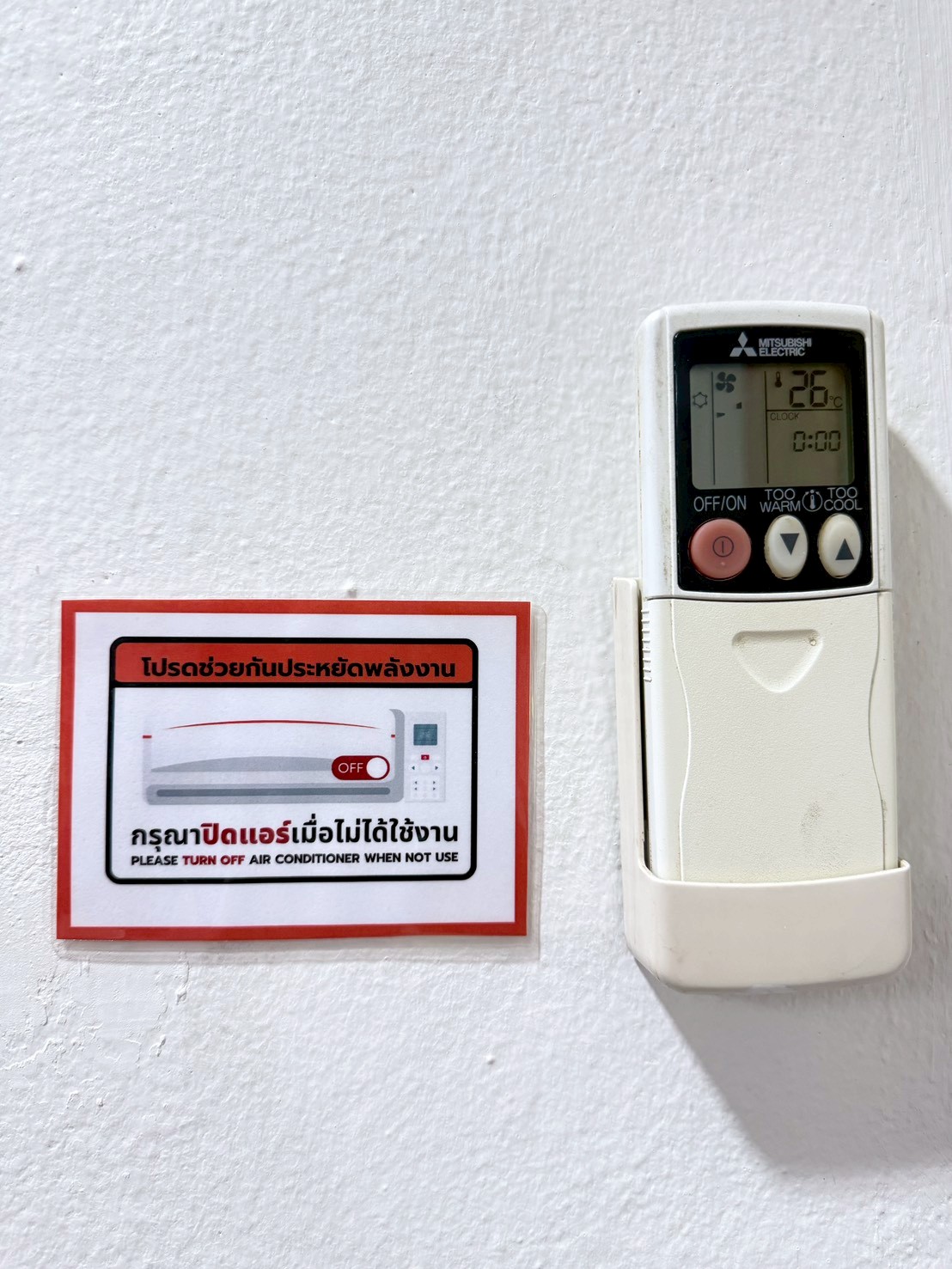
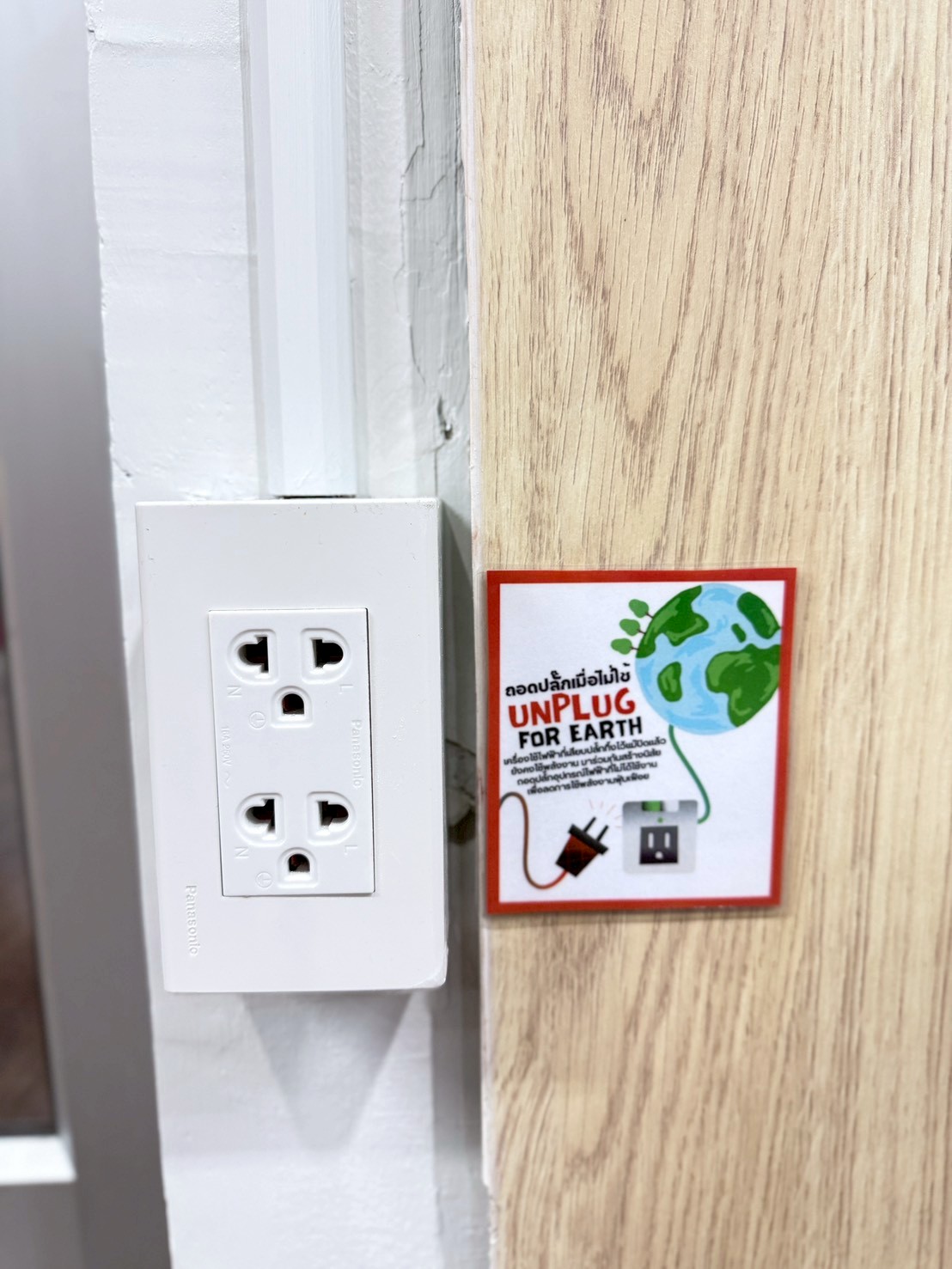
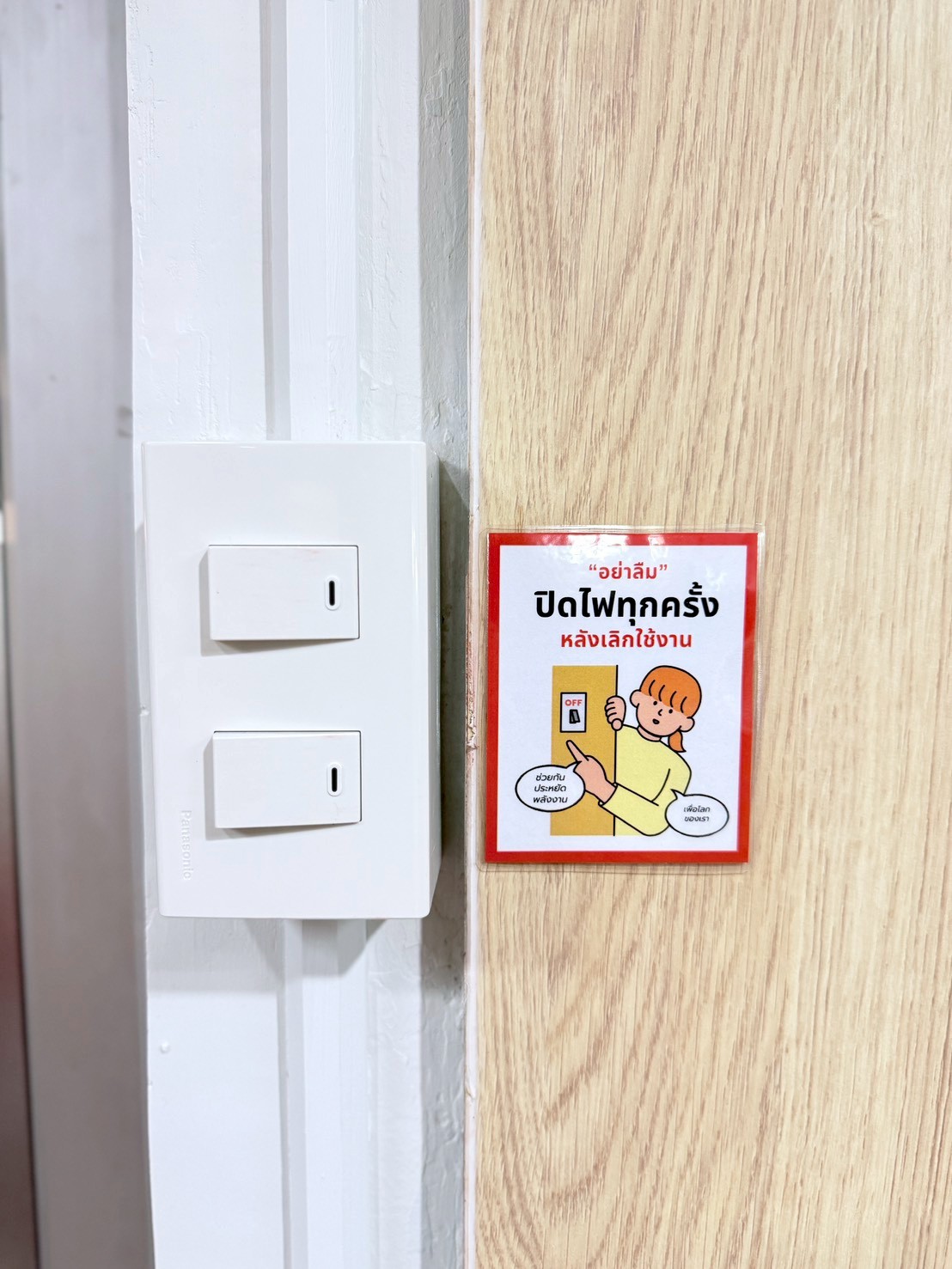
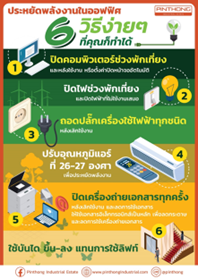
The Company prioritizes raising awareness and promoting employee participation in efficient energy use by establishing energy conservation measures in office areas alongside ongoing communication, to cultivate mindful energy-use behavior, reduce unnecessary energy use, and support operational-level GHG reduction. Employees across the Company are encouraged to follow the measures below:
●Turn off computer monitors whenever not in use
●Set air conditioning temperature to no higher than 25°C
●Switch off electrical appliances not in use
●Turn off photocopiers after each use
●Replace light bulbs with energy-efficient systems
●Establish annual maintenance plans for air conditioning systems (cleaning, refrigerant replacement)
Renewable Energy Production
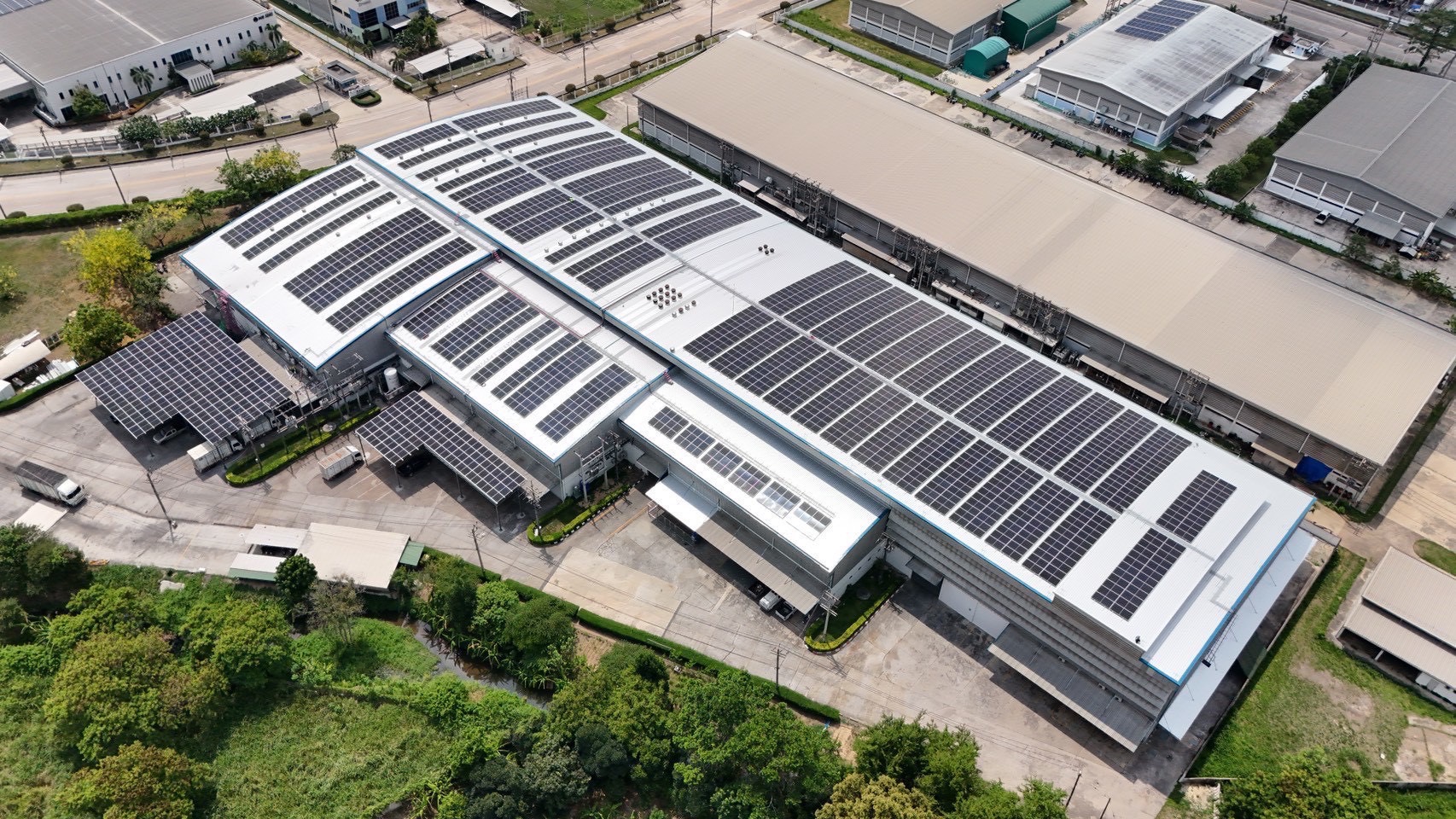
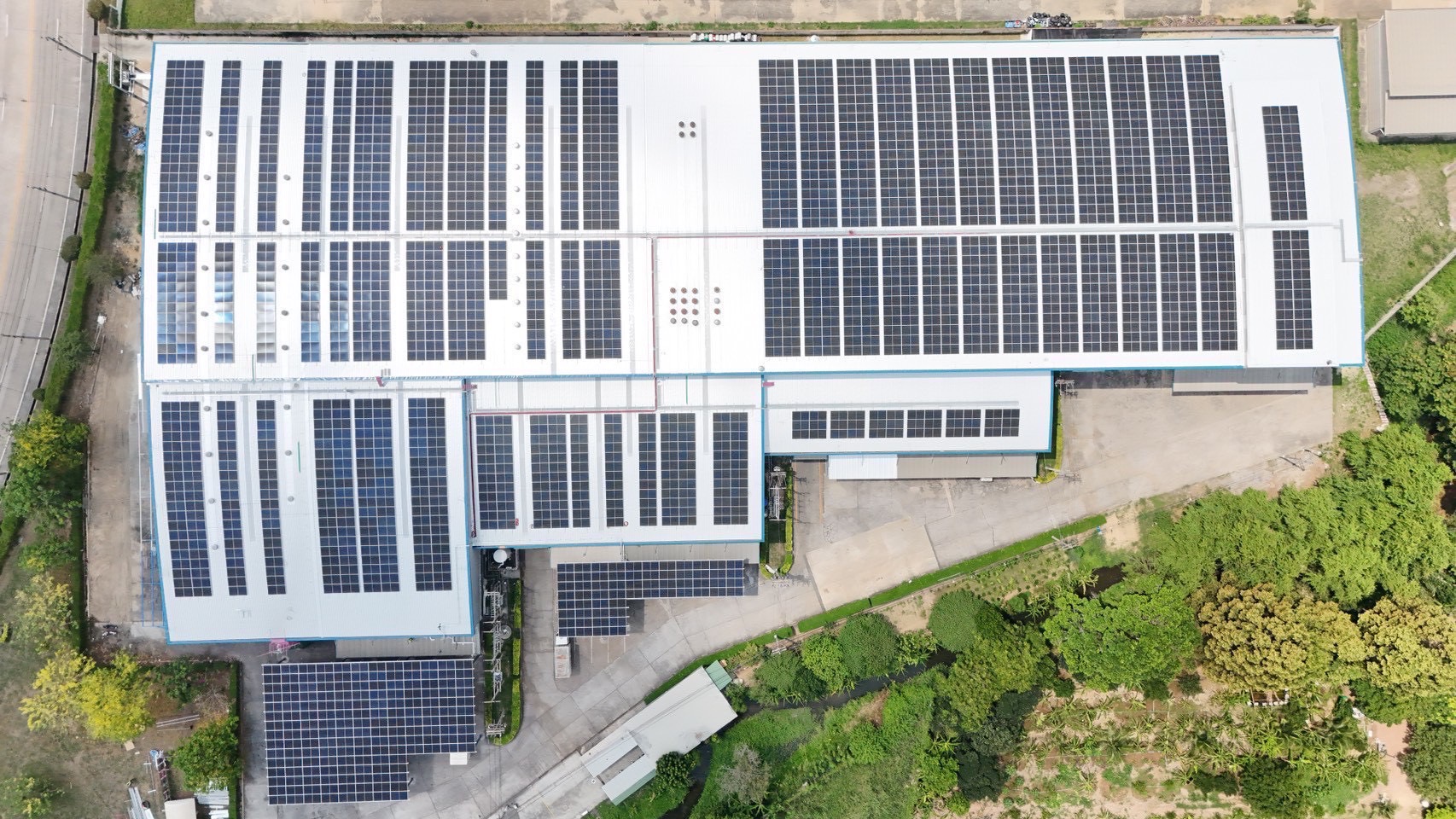
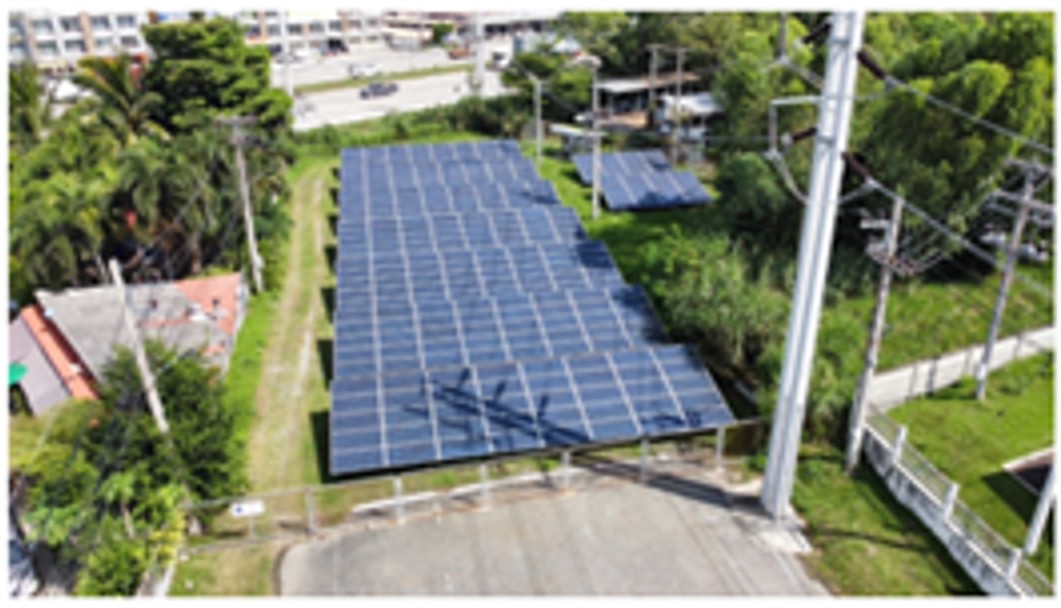
In 2025, the Company produced a total of 5,059.11 GJ of solar renewable energy from its owned solar power systems — both those supporting the Company's own operations and those installed on operator premises within Pinthong Industrial Estates under the Company's energy service offerings. The Solar Roof systems on office buildings and the Solar Farm at Pinthong Industrial Estate (Laem Chabang) — which directly support the Company's operations — have a combined installed capacity of 179.20 kWp and generated 112,090 kWh in 2025, down from 234,632 kWh in 2024 — a decrease of 47.77% — due mainly to weather variability reducing sunlight hours and scheduled shutdowns for equipment maintenance.
SOLAR ROOF

SOLAR FARM
Renewable Energy Use in the Organization
Of the total solar electricity produced in 2025, the Company used 403.52 GJ in activities under its operational control — a portion of total internal energy consumption. This renewable energy use helps reduce reliance on externally purchased electricity and supports the Company's greenhouse gas reduction targets from its operations.
Renewable Energy Use in the Office
In 2025, the Company used a total of 112,090 kWh of solar electricity produced by the Solar Roof systems on office buildings and the Solar Farm at Pinthong Industrial Estate (Laem Chabang) — representing 2% of total company electricity use and 30.1% of total office electricity use — reducing purchased electricity costs by 448,360 THB/year. Through continuous energy efficiency programs focused on solar energy since 2017–2025, renewable energy usage has grown at an average of 2.98% per year, reducing GHG emissions by 53.24 tCO2e (calculated using the GHG emission factor of 0.4750 kgCO2e/kWh from the Thailand Greenhouse Gas Management Organization [TGO]).
Renewable Energy Use in Utility Systems
The Company continuously promotes and supports increasing the share of renewable energy in utility systems — particularly solar electricity — to diversify energy sources, reduce reliance on external electricity, control energy costs, and support the organization's greenhouse gas reduction.
In 2025, the Company installed Solar-powered Surface Aerators in the wastewater treatment system at Pinthong Project 5 to improve wastewater treatment efficiency alongside renewable energy use. The total installed capacity is 17.6 kW, with solar-generated electricity powering the aeration system during daytime, reducing electricity consumption from the main grid. The system is expected to generate approximately 38,500 kWh per year — depending on sunlight hours and usage patterns — reducing GHG emissions by approximately 19 tCO2e per year and lowering the wastewater treatment system's energy costs over the long term.
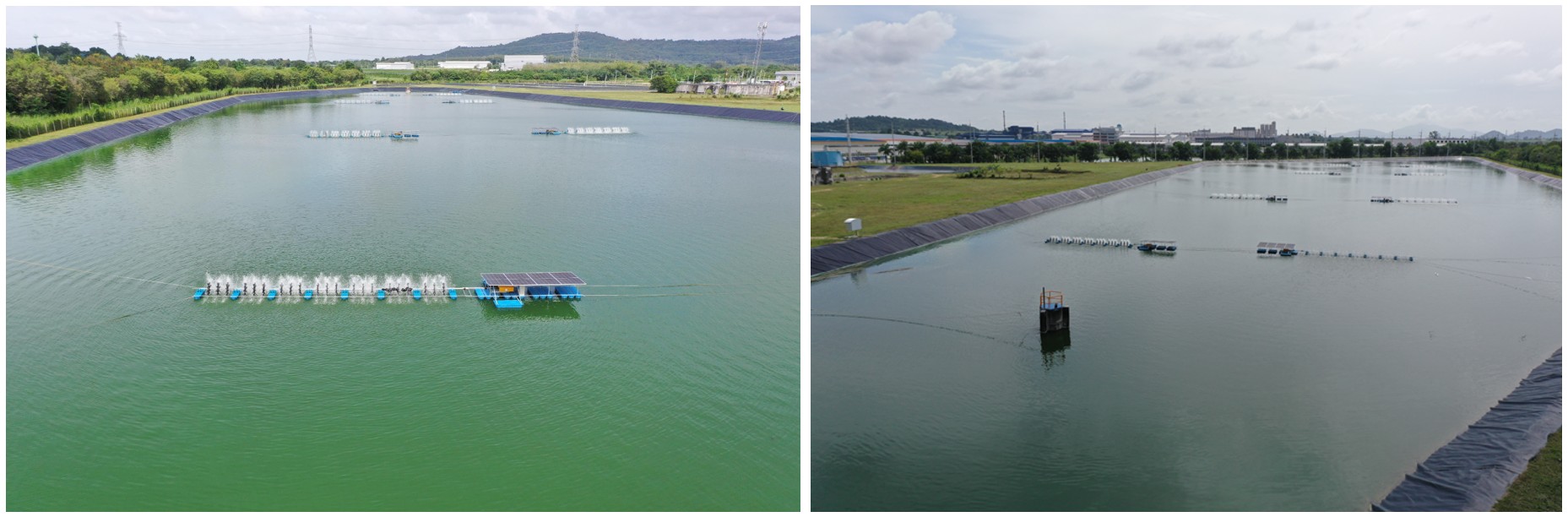
Solar-powered Surface Aerator — Pinthong Project 5
In addition, the Company is preparing an action plan to install solar renewable energy systems in utility areas of Pinthong Industrial Estate — scheduled for implementation in 2026 — covering 3 areas:
●Utility system — raw water pond at Pinthong Industrial Estate, installed capacity 357.84 kW
●Utility system — tap water production and raw water reservoir at Pinthong Industrial Estate (Laem Chabang), installed capacity 842.48 kW
●Utility system — raw water retention pond at Pinthong Industrial Estate (Project 5), installed capacity 5,000 kW
Floating Solar Project

Sale of Renewable Energy to Industrial Estate Users
In addition to using solar electricity within the organization, in 2025 the Company also sold 4,655.59 gigajoules of clean solar electricity to industrial estate users under Power Purchase Agreement (PPA) contracts, reflecting the Company's role in supporting access to clean energy for operators in the area. However, this volume of energy is produced for sale and is not the energy actually used by the Company in activities under its organizational control, and is therefore presented separately from the internal energy consumption data.
Promoting Renewable Energy Use in the Industrial Estate
In 2025, the Company and operators within Pinthong Industrial Estate expanded the installed renewable energy capacity on the Company's premises and in operator factories within the estate to a combined total of 33.9 megawatt-peak (MWp), exceeding the set target of 25 MWp. This reflects tangible success in driving clean energy use within the industrial estate and contributes to reducing reliance on fossil fuel energy, alongside improving energy efficiency and reducing greenhouse gas emissions for both the Company and operators.
This success stems from the Company's role in promoting and facilitating operators' access to rooftop solar photovoltaic systems (Solar Roof) by providing comprehensive installation and related services, along with investment options tailored to operators' needs in two forms: Engineering, Procurement and Construction (EPC) — suitable for operators who wish to invest themselves and benefit from electricity savings from the start with a reasonable payback period; and Power Purchase Agreement (PPA) — which enables operators to use solar electricity without upfront investment, reduces the burden of system maintenance, and pays for electricity based on actual usage.
Furthermore, the Company continuously conducts public relations and builds awareness among operators within the industrial estate, reaching out to present information and benefits of installing Solar Roof systems via phone and direct customer visits to support decision-making and accelerate actual installation. As a result, the increase in renewable energy use in 2025 exceeded the set target.