Risk & Crisis Management
Proactive risk management under COSO ERM 2017 — covering all ESG dimensions for sustainable business continuity.
Risk and Crisis ManagementMateriality Level : High


Targets and Performance
| KPI | Long-term Target 2030 | Target 2025 | Actual 2025 |
|---|---|---|---|
| Proportion of ESG risks integrated into the ERM system and assessed under the same criteria as general risks | 100% | 100% | 100% |
| Risk Management Working Group members completed risk training | 100% | 100% | 100% |
| Success rate of Business Continuity Plan (BCP) testing | 100% | 100% | 100% |
Risks and Opportunities
Analyzing and assessing internal and external impact factors in the industrial estate context may expose operations to multiple risks — including financial risks, investment risks, and area management costs, as well as risks from non-compliance with environmental laws or land-use regulations, which could involve serious cases of pollution, noise, odor, or industrial waste, resulting in partial shutdown orders and potential costs for remediation, restoration, or compensation. It also covers risks related to human rights, health, and safety of workers and surrounding communities, which may affect the reputation and confidence of all stakeholder groups.
At the same time, comprehensive and systematic risk analysis opens opportunities for the industrial estate to efficiently plan area and utility management, establish proactive preventive measures, reduce the likelihood of serious incidents, and elevate governance standards in line with economic, social, and environmental changes — building confidence among operators, investors, and surrounding communities, while supporting long-term sustainable growth.
Strategy and Management
The Company recognizes the significance of environmental, social, and governance (ESG) risks that may affect industrial estate operations in both the short and long term. Material ESG Risks are incorporated into strategic planning and investment decisions — covering energy and water infrastructure development, environmental management within the estate, occupational health and safety of workers and operators, and regulatory compliance. The Company gives priority to comprehensively assessing potential impacts on stakeholders, corporate reputation, and business continuity.
The Company has adopted the COSO ERM 2017 framework for proactive risk management — establishing a Risk Management Policy, organizational objectives, risk categorization, and likelihood-impact assessment. Control measures are defined to prevent or mitigate potential organizational damages, supported by a Risk Management Manual guiding systematic, efficient, and consistent risk identification, evaluation, and treatment across the organization. The Company also places importance on the Business Continuity Plan (BCP), with the Board approving and announcing key policies, namely:


Governance Structure
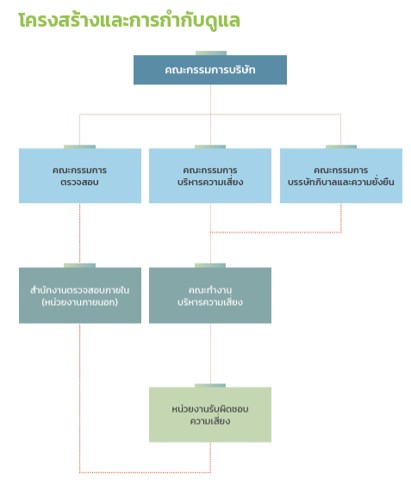
| Responsible Body | Roles and Responsibilities |
|---|---|
| Board of Directors | Oversee organizational risk management in line with strategy, business goals, and good corporate governance — including reviewing key risks and approving disclosure of business- and sustainability-related risks and opportunities. |
| Risk Management Committee | Define the policy, framework, and approach for risk management covering all business dimensions, including establishing Risk Appetite & Risk Tolerance levels, overseeing systematic risk management, and regularly reporting key issues to the Board of Directors. |
| Risk Management Working Group | Support the organization's risk management operations by coordinating with relevant units, identifying and assessing all risk types — strategic, operational, financial, legal, environmental, social, and emerging risks — maintaining and updating the Risk Register, monitoring control measures and residual risks, and supporting the development, review, and testing of BCPs and emergency response plans. |
| Risk-Responsible Units (Risk Owner) | Manage risks within their own scope by identifying, assessing, and defining risk control measures, monitoring residual risks, integrating risk management into daily operations, and reporting status to management and the Risk Management Working Group, while developing and testing BCPs for key unit processes to build a risk management culture throughout the organization. |
Performance Monitoring
Risk-responsible units report on the implementation of risk prevention, control, and mitigation measures within their scope to management-level meetings. The Risk Management Working Group convenes to plan and summarize enterprise risk assessments across all dimensions, reporting to the Risk Management Committee for review, then presenting to the Board of Directors for acknowledgment and approval of the action plan and risk management framework.
The Company also has a mechanism for receiving complaints and suggestions from both internal and external stakeholders through accessible, transparent, and fair channels. Complaints related to environmental, social, or business continuity impacts are incorporated into the risk management process and BCP review to define appropriate and systematic corrective, preventive, and monitoring measures.
Risk Management Monitoring — 2025
| Responsible Body | Monitoring Activity | Frequency |
|---|---|---|
| Board of Directors | Acknowledged risk management reports | 2 times |
| Risk Management Committee | Risk management monitoring meetings | 4 times |
| Risk Management Working Group | Review meetings on risk assessment results | 2 times |
| Risk-Responsible Units | Operational performance reporting | 6 times |
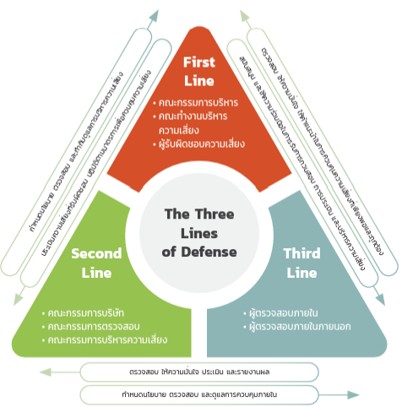
The Company has adopted the Three Lines of Defense (3LOD) framework for governance, risk management, and internal control. Its purpose is to clearly define the roles and responsibilities of each unit, establish appropriate Checks and Balances, and promote efficient, transparent, and organization-wide integration of risk management, governance, and operations.
Operational Approach
The risk management process begins with clearly defining policies and objectives by management, followed by implementation through established risk mechanisms alongside internal control and audit systems to evaluate goal achievement, then continuously improving processes based on results. This is divided into 5 key steps:
Step 1: Define Objective
Step 2: Risk Identification
Step 3: Risk Assessment Process
Step 4: Risk Treatment
Step 5: Monitoring and Reporting
Key Risk Assessment of Pinthong
In 2025, the Company developed a risk management plan with 19 operational risk factors covering 4 main risk categories: Strategic Risk, Operational Risk, Financial Risk, and Compliance Risk. These are classified and linked to ESG sustainability dimensions to comprehensively reflect potential impacts — covering environmental, social, and governance/economic risks, as detailed below.
| Risk Category | Economic Risk | Environmental Risk | Social Risk | Governance Risk |
|---|---|---|---|---|
| Strategic Risk | 1) Risk of land title transfer delays 2) Risk of maintaining building occupancy rates 3) Competitive risks from other industrial estate operators 4) Risk from rising land values |
Risks from changes in economy, politics, government policy, and other macroeconomic factors | ||
| Operational Risk | 1) Risk of flooding 2) Risk of fire |
1) Insufficient water supply to fulfill customer obligations 2) Water production and wastewater treatment system disruption 3) Repair completion delays 4) Ineffective Preventive Maintenance plan 5) Employee recruitment process risks 6) Absence of succession planning 7) Non-compliance with corporate governance (HR management) 8) Epidemic/pandemic risk |
1) Non-compliance with corporate governance (procurement) 2) Risk of cyberattack from external computer viruses |
|
| Financial Risk | 1) Liquidity management risk 2) Interest rate volatility risk |
|||
| Compliance Risk | 1) Government permit delays beyond planned schedule 2) Changes in laws related to computers and information technology (Computer Crimes Act) |
Emerging Risks
In the organizational risk assessment process, the Company identifies risks that may emerge over the next 3–5 years as follows:
Physical Climate Risk
The Company recognizes the risks and impacts from increasingly severe and frequent climate change, a key factor that may affect industrial estate operations in both the short and long term. Physical Risks from extreme weather events — such as heavy rain, flash floods, heat waves, and drought — may damage roads, drainage systems, electricity systems, and utilities within the estate, causing operators to halt or slow production, impacting business continuity, revenue, and the confidence of operators and investors. Furthermore, intensifying heat waves increase energy demand, reduce labour productivity, and accelerate deterioration of machinery and infrastructure, while drought and water scarcity affect water-dependent industries, raising water management costs and investment in water reserve systems.
The Company therefore designates Physical Climate Risk as a Key Risk requiring regular assessment — reviewing severity and likelihood at least annually or upon significant events, evaluating the effectiveness of control measures and response plans, and conducting Scenario Analysis for severe impact cases to strengthen readiness against uncertainty. Climate risk is integrated into the enterprise risk management process with Risk Monitoring indicators aligned to the estate's context — such as rainfall, water levels, average temperature, and frequency of extreme events — collecting data from reliable sources to track situations, verify infrastructure and utility readiness, and continuously review and update risk management and BCP plans, alongside infrastructure resilience investments and joint emergency drills with operators. Assessment results and risk status are reported to management and the Board for strategic decision-making aligned with the evolving risk context.
The Company monitors and assesses climate risks through indicators appropriate to the industrial estate context, such as flood frequency, cumulative rainfall, utility disruption duration, and BCP test results. These monitoring outcomes are reported to management and the Board to inform ongoing strategic decision-making and infrastructure resilience investment.
Tightening Environmental Regulations and Policies
Changes in laws and requirements related to climate change (Transition Risks) — including tightening GHG emission reduction measures, waste and water management, and increasingly important ESG standards for investors — are key factors that may affect business operating models, competitiveness, and investment decisions in industrial estates. This requires both developers and operators within the estate to improve operational processes, make additional investments for preparedness, and may result in project development delays.
To reduce impacts and strengthen response capacity, the Company has integrated the low-carbon economy transition and ESG standards into its enterprise risk management system, closely monitoring trends in laws, regulations, and investor expectations, while regularly assessing business impacts. The Company prioritises proactive preparedness through development of environmental infrastructure and support systems — such as central waste and wastewater management, promotion of clean and efficient energy use, advisory services for operators within the estate, and transparent ESG disclosures — to build operator confidence and reduce regulatory risk.
Digital Transition and Cyber Threats Risk
Technology-driven operations — such as Smart / Digital Industrial Estate and infrastructure control systems (SCADA, IoT) — expose the organization to cybersecurity risks, including risks of customer and sensitive data leakage that may affect system security and operator confidence. Key risks include cyberattacks that may disrupt utility system and core infrastructure availability, unauthorized interference with automated systems, and data breaches affecting operators and customers.
The Company continuously develops information security measures and cyberthreat protection — establishing appropriate access rights by role, implementing monitoring, surveillance, and risk assessment mechanisms, and promoting IT security awareness and knowledge among employees and relevant parties — to reduce data leakage and cyberthreat risks, elevate digital and IT security to a high level, and build operator confidence.
Industry Structure Transformation Risk
Global trends toward new industries — EV, Battery, Data Center, and High-Tech Manufacturing — significantly change electricity, water, and waste management demand patterns, particularly the need for high and stable electricity supply, specialised water quality, and waste management for new raw materials that must meet stringent environmental standards and reduce GHG emissions. If the industrial estate cannot adapt its infrastructure and utilities to meet these needs promptly, it may require high investment, lose business opportunities, and affect long-term competitiveness — especially in the context of achieving market leadership or making strategic adaptations ahead of competitors.
The Company closely monitors global industry trends and investment directions, using analysis results to systematically plan infrastructure and utility development within the estate — emphasizing flexibility and scalability to meet future demand, covering electrical systems, water and wastewater treatment, waste management, and designing services aligned with target industry needs.
Evolving Community Expectations and Social Pressure Risk
Risks arising from evolving community expectations and social pressure are an Emerging Risk of increasing importance to the Company's industrial estate operations, as the industrial estate is directly connected to surrounding communities in terms of environment, resource use, employment, and local quality of life. In the current context, communities and stakeholders are more attentive and demand more of industrial estate operators — both compliance with laws and related standards, and proactive environmental management such as air, water, and noise pollution control, efficient industrial waste management, prudent resource use, and participation in sustainable community development. At the same time, access to information and expansion of online social media means complaints can be rapidly published and amplified, enabling widespread social pressure in a short time. Combined with stronger civil network roles, new or expanded projects become more sensitive. The nature of risk therefore shifts from considering only actual impacts to focusing on social perception — which may affect image, credibility, and stakeholder confidence, and lead to project development delays, increased costs, and business continuity impacts. The Company must therefore prioritize managing relationships with communities and stakeholders.
By closely monitoring social expectation trends and emerging risk issues, developing proactive communication mechanisms, opinion gathering, and continuous community engagement — alongside elevating environmental and social operational standards — to build confidence and respond to evolving risks.
Supply Chain and Geopolitical Risks
Geopolitical uncertainty — including international conflicts, trade policy changes, trade barriers, and global supply chain restructuring — affects customer and investor decisions, production base relocation and diversification directions, and operator investment timing. This may lead to volatility in area rental demand, investment delays, or production capacity reductions by some operators, impacting occupancy rates, revenue, and industrial estate development plans in both the short and long term. It also adds complexity to infrastructure planning and service provision that must accommodate rapidly changing industry needs.
The Company defines measures to handle and reduce geopolitical and global supply chain risks, closely monitoring key situations that may affect investments and using analysis results to plan flexible industrial estate development accommodating changes in target industries and diverse investment models, as well as adapting infrastructure development and service plans to meet operator needs at each period — to maintain occupancy rates, income stability, and build confidence among customers and investors, thereby enhancing competitiveness and supporting long-term growth.
The Company views risk management in the industrial estate business context not merely as prevention or mitigation of negative impacts, but as a key mechanism for building long-term business opportunities and strategic advantages amid changes in economic, social, technological, and environmental factors. The ability to manage risks systematically enables the organization to adapt flexibly and grow continuously.
- Increasingly severe climate change risks — such as floods, droughts, and heat waves — drive the Company to strengthen infrastructure and utility development for resilience and emergency readiness. Such investment not only reduces business continuity risks but also builds confidence among operators and investors who prioritise Climate Risk preparedness. Meanwhile, tightening environmental regulations, GHG reduction measures, and investor ESG standards present opportunities to develop the industrial estate toward an environmentally friendly, low-carbon economy model.
- Preparedness in waste management, wastewater treatment, and efficient resource use elevates industrial estate quality and enhances capacity to attract high-value investments. Developing toward a Smart/Digital Industrial Estate, while carrying technology and cyber risks, represents a significant opportunity to create added value through digital services, intelligent infrastructure management, and elevated system and data security standards — building operator confidence and positive experience.
- The transformation of global industrial structure toward new industries — such as EV, Battery, and high-technology manufacturing — opens opportunities for the Company to transition from a land developer to a future industrial platform, through developing flexible infrastructure that meets the specialised needs of target industries, alongside building positive relationships with communities and all stakeholders to maintain social acceptance, business stability, and drive long-term growth.
Business Continuity Plan (BCP)
The Company prioritizes preparedness for crisis situations or emergencies that may disrupt operations — including natural disasters, infrastructure failures, IT system inaccessibility, and public health events. A systematic Business Continuity Plan (BCP) has been developed and implemented, covering both organizational and operational levels.
Implementation begins with a Business Impact Analysis (BIA) to identify critical processes, infrastructure, utilities, and key services essential to operations, establishing priorities, Recovery Time Objectives (RTOs), and resources for emergency response. Plans are integrated in alignment with the industrial estate's role toward factory operators, local authorities, the Industrial Estate Authority of Thailand, and relevant external agencies — enabling swift coordination, command, communication, and incident response, as well as recovering operations within an appropriate timeframe.
The Company has developed prevention, mitigation, and operational recovery plans for various crisis situations, namely:
- Fire Prevention and Mitigation Plan
- Accident, Chemical & Hazardous Material Spill Prevention Plan
- Workplace Hazard Prevention and Mitigation Plan
- Traffic Incident Prevention and Mitigation Plan
- Flood Prevention and Mitigation Plan
- Communicable Disease and Epidemic Prevention & Control Plan
Additionally, the Company has developed BCPs for ESG-Related Risks that may directly affect operations — including a flood and drought response plan for water production and treatment systems, electricity and water contingency plans, IT system backup and recovery plans, and emergency personnel management plans. The Company also emphasizes crisis command structure and communications — clearly defining the BCP working group's roles, duties, and responsibilities, and establishing internal and external communication channels to promptly and transparently inform employees, operators, and stakeholders — alongside regularly reviewing and updating plans through drills, testing, and post-incident evaluations to keep them current, aligned with evolving risk contexts, and practically implementable. These actions enhance readiness, resilience, and confidence in crisis management capabilities, supporting the long-term business continuity of the Company and operators in Pinthong Industrial Estate.
Risk Management Culture
Integrating Risk Management into Actual Work Processes
The Company prioritizes building a risk management culture as an integral part of operations at all organizational levels — grounded in good corporate governance, accountability, and participation of all personnel. Key Risk Indicators (KRIs) are established as essential tools for monitoring risk status and providing early warning signals, enabling timely and effective risk management, linked to KPIs. Key Risks are identified at both organizational and unit levels through impact and likelihood assessments, including linkages to strategy, goals, and business continuity, before defining KRIs that appropriately, clearly, and quantifiably reflect risk changes. In establishing KRIs, the Company focuses on selecting Leading Indicators rather than lagging indicators to detect risk signals before impacts occur, with defined Thresholds and risk levels: Normal, Watch, and Critical — along with response guidelines when KRI values approach or exceed defined thresholds.
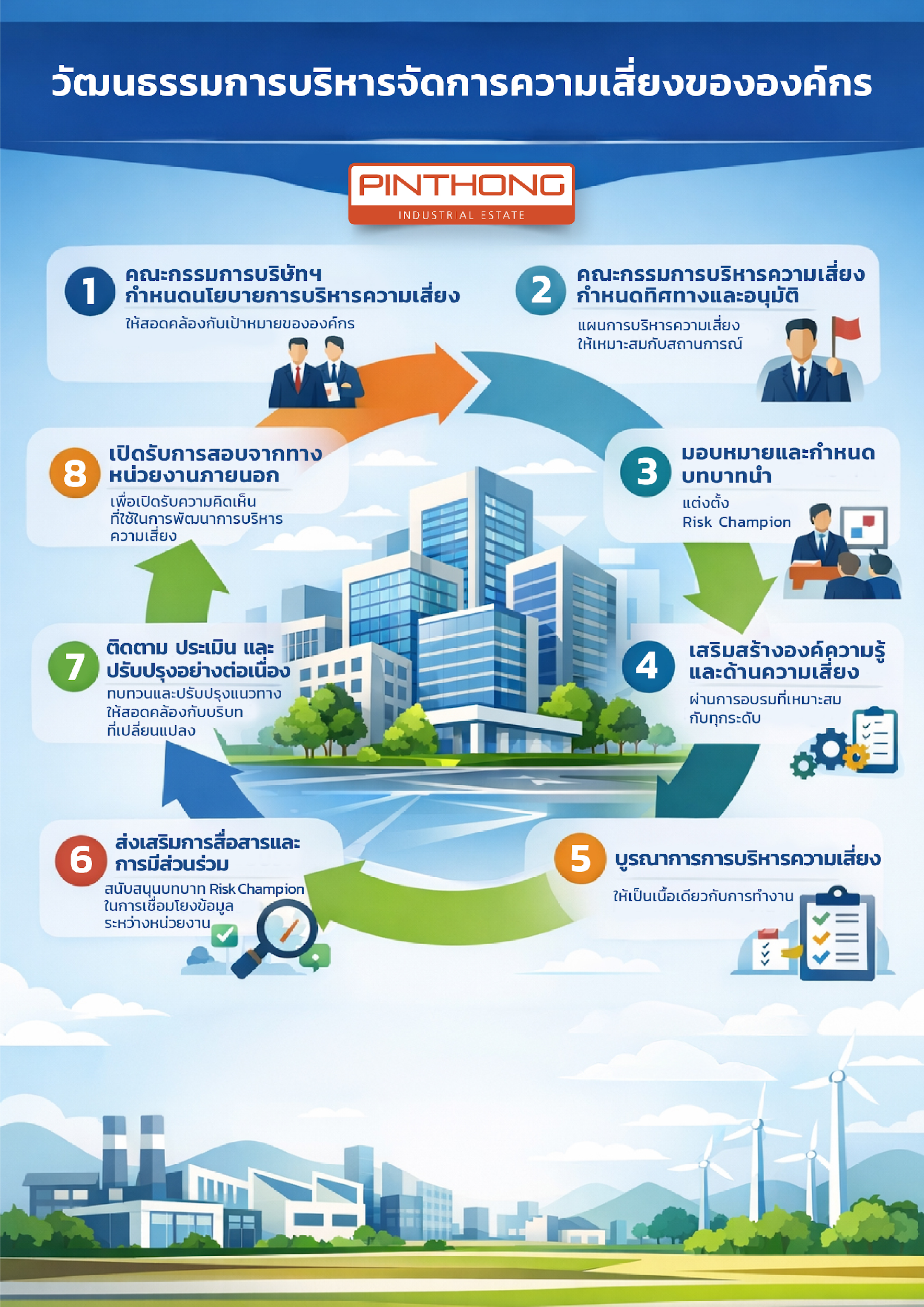
KRI management results are linked to performance evaluations of executives and units — including ability to maintain KRIs within acceptable levels, speed of corrective action when KRIs exceed thresholds, and continuity of monitoring and reporting — ensuring risk management is a clear performance accountability. KRIs and KPIs are regularly reviewed and updated in alignment with business contexts, emerging risks, and organizational strategies, serving as information for decision-making and plan adjustments to ensure effective risk management. The Company emphasizes comprehensive communication and participation by all units, supporting the role of Risk Champions, promoting cross-unit information sharing, and creating a knowledge exchange environment alongside openness to internal and external audit review. Recommendations are utilized to develop, improve, and elevate risk management to be robust and transparent.
Employee Risk Representatives (Risk Champions)
The Company appoints employee risk representatives (Risk Champions) from each unit to join the Risk Management Working Group, serving as the primary mechanism for driving risk management within their units. Responsibilities include communicating risk policies and practices, reflecting operational risk issues, developing and tracking unit risk management plans, and continuously coordinating and reporting to the organizational-level Risk Management Working Group. Risk Champions are required to attend annual training and knowledge review sessions with expert facilitators, to appropriately apply risk management approaches in work processes and keep pace with changes in the risk context.
The Company also requires regular joint meetings between operational and management-level units — at least once per month — so Risk Champions and employees can share risk information, track risk management measures, and discuss process improvements aligned with changing risk levels. This ensures comprehensive risk communication, active participation, and practical implementation across all units.