Innovation & Process Development
Advancing toward a "Digital Industrial Estate" through innovation addressing business, social, and environmental dimensions.
Innovation & Process DevelopmentMateriality Level : High



Targets & Performance
| KPI | Long-term Target 2030 |
Target 2025 |
Performance 2025 |
|---|---|---|---|
| Number of new innovative products / new processes | At least 1 project | At least 1 project | 1 project |
| Customer request handling time compared to base year 2024 | More than 80% | More than 70% | 72% |
| Proportion of requests handled through automated systems | Not less than 80% | Not less than 60% | 20% |
| Proportion of supplier usage through digital systems continuously (PIN/Line) | 100% | More than 90% | 92% |
Risks & Opportunities
Innovation and process development open opportunities for the industrial estate to elevate operational efficiency through Smart Operations that help connect data and communications under unified standards, reduce unnecessary steps, and support more accurate data-driven decision-making, while enhancing the image of an industrial estate ready for future industries that can meet the needs of modern investors. One Stop Service through digital technology also enables stakeholders to access information and services more conveniently, while context-appropriate innovation enhances readiness to monitor and respond to environmental emergencies, strengthens safety, and boosts the long-term competitiveness of the industrial estate.
At the same time, ineffective financial management for innovation investment may impact project cash flows and returns. Rapid technological change may also render selected technologies obsolete in the medium term, creating sunk costs. In addition, operators within the industrial estate may not yet be ready in terms of knowledge or personnel to use innovation, causing actual utilization to fall below designed potential. Reliance on digital systems and data further increases risks in cybersecurity, privacy, and business continuity, along with legal, permitting, and community acceptance constraints for certain types of innovation.
Strategy & Management
The Company aims to elevate the organization toward becoming an industrial estate ready for future industries, in line with the R.I.S.E. strategy, with a key goal of transitioning traditional work processes to automated systems and smart technology — to increase operational efficiency, reduce costs, and create added value for products and services, while strengthening competitive capability and long-term organizational growth. Emphasis is placed on developing innovation that addresses business, social, and environmental dimensions. The Company has therefore established a Policy and Practice on Organizational Innovation Development to promote a culture of creativity, personnel capability development, and continuous process improvement — supporting the adoption of knowledge, technology, and innovation from both internal and external sources. Clear objectives, strategies, KPIs, and action plans are defined, along with assessment of innovation opportunities, risks, and benefits to maximize resource utilization in alignment with organizational direction. The scope covers customer relationship management, proactive utility management, and digital infrastructure development — to create an agile, modern industrial ecosystem that reduces long-term operating costs.

Governance Structure
To ensure operations comply with the defined policy, the Company has established a governance structure and defined the roles and responsibilities of various units in driving innovation — from setting direction, to management, monitoring, and evaluation, as follows:
| Responsible Unit | Roles and Responsibilities |
|---|---|
| Board of Directors | Set overall direction and policies on innovation and smart technology, oversee alignment of operations with corporate strategy, sustainable development goals, and related risk management, and approve investments or key projects within the defined authority framework. |
| Executive Committee | Plan strategy and drive innovation operations in line with corporate policy, set targets and related KPIs, monitor performance, and oversee risk management covering technology, usage, and organizational change, and promote the use of stakeholder data and feedback in developing systems and work processes. |
| Development and Support Units | Develop, maintain, and improve information technology systems and digital infrastructure to ensure security, availability, and effective and continuous support of organizational operations. |
| Identify usage requirements and system specifications from an operational perspective, support system testing, and monitor actual usage to ensure systems appropriately meet operational needs. | |
| Promote skills development and personnel readiness to adapt to and use new technologies, and support the building of a learning and change culture within the organization. | |
| Coordinate across units, provide relevant data and feedback, and jointly develop, improve, and drive effective use of systems. | |
| Employees and Users | Use systems in accordance with defined procedures and standards, maintain the accuracy of related data, and provide feedback or report issues from actual use to support continuous improvement of systems and work processes. |
To drive the organization toward becoming an industrial estate of the future that intelligently uses digital technology, the Company has established a systematic innovation development strategy and framework, focusing on integrating digital technology into core work processes to enhance efficiency, reduce costs, and elevate service quality — spanning from exploring stakeholder problems and needs, transforming work processes to digital systems, to data analysis and proactive development to support long-term industrial sector growth and change, as follows:
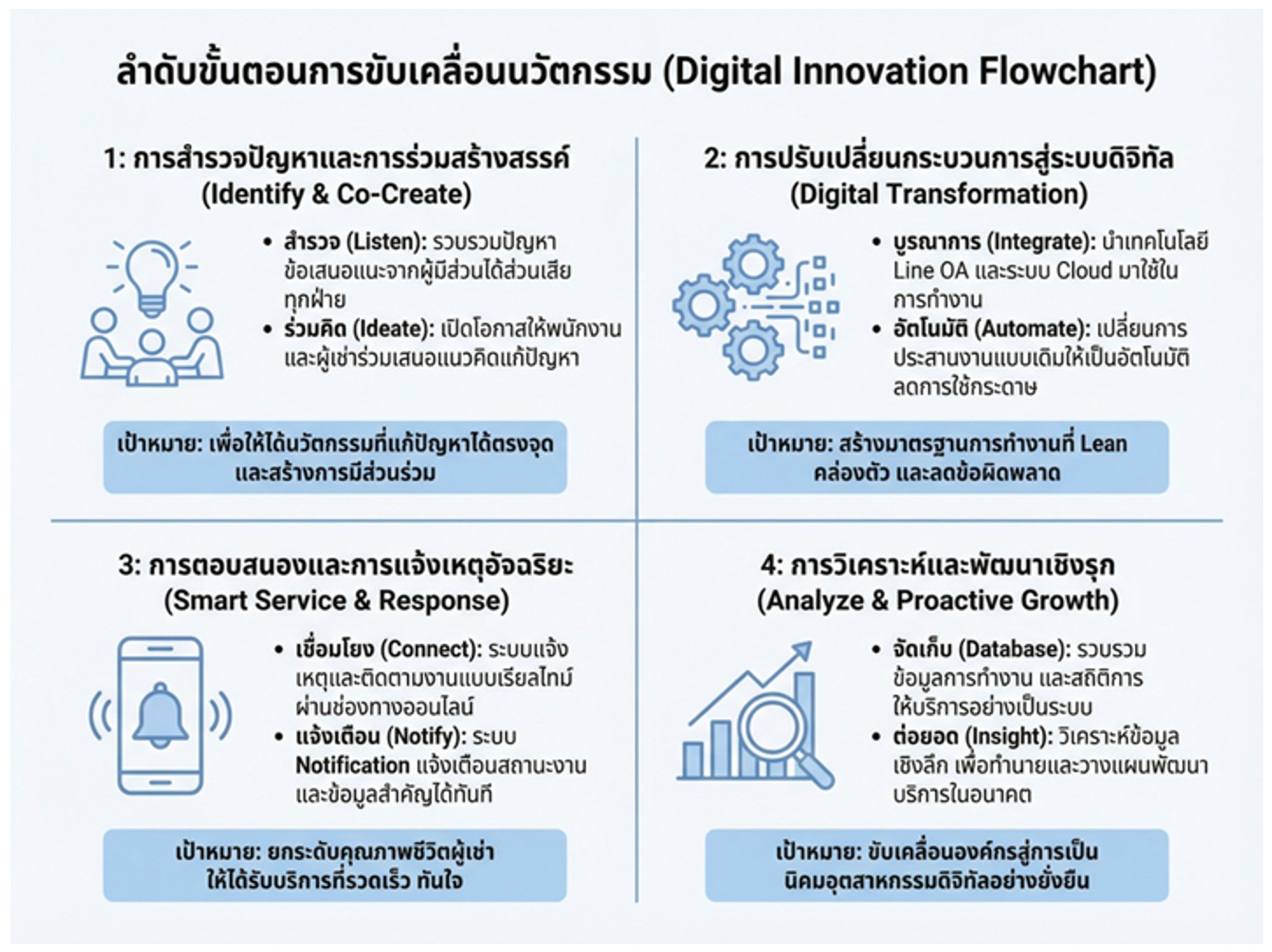
Under the framework of innovation and process development strategy, the Company aims to elevate its industrial estate into a Green & Smart Industrial Ecosystem by integrating innovation, technology, and systematic collaboration with infrastructure development, services, and management — to support future industries in the eastern region, alongside efficient resource use, environmental impact reduction, and sustainable value creation with stakeholders. The Company applies the innovation development framework across three main dimensions: Innovation Driving the Industrial Ecosystem, Innovation Creating Value for Operators, and Innovation Enhancing Work Efficiency — reflecting comprehensive innovation development at the strategic, value delivery, and process improvement levels.
1. Innovation Driving the Industrial Ecosystem
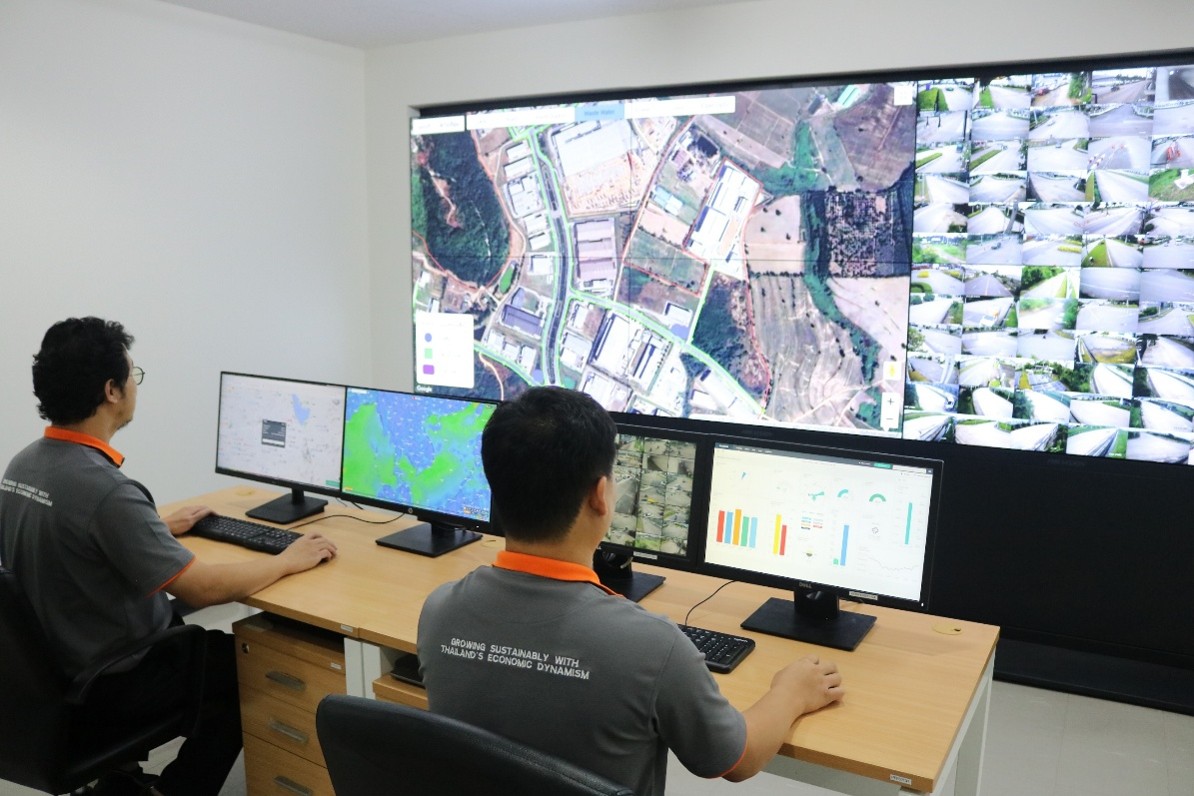
The Company aims to develop Smart Utility Infrastructure that integrates the operation of energy, water, and environmental systems through IoT Sensor technology and a centralized digital platform — to elevate resource management at the estate level with accuracy, reduced losses, and maximum efficiency. The Company has developed and begun installing intelligent sensor networks covering core utility systems including electricity, water, wastewater treatment, and environmental quality monitoring systems. These can measure and transmit data in real time to a central Control Room, enabling continuous tracking of energy consumption, water usage, effluent quality, and air quality within the estate, and supporting trend analysis to enhance resource efficiency and reduce potential losses. In addition, the Company has applied renewable energy and energy storage systems to manage energy balance and support overall greenhouse gas emission reduction. At the same time, the Company has developed a digital platform that connects utility data, enabling operators to access their own service usage information online — such as water consumption and effluent quality data — presented through an easy-to-understand Dashboard. Operators can review historical data, analyze trends, and use the information for effective planning, helping them control costs, reduce losses, and increase operational efficiency quickly and accurately.
2. Innovation Creating Value for Operators
The Company aims to elevate the service experience and customer relationships within the industrial estate through the development of a Customer Service Management Platform — a one-stop digital platform for handling requests and complaints. The platform enables operators to report issues, request services, and coordinate utility-related matters quickly, conveniently, and transparently through a centralized online channel. The system is designed to receive cases, track progress, and automatically notify customers at every stage — from request intake, assignment to relevant units, through to case closure — with real-time Notification, helping reduce response time, improve service accuracy, and build operator confidence.
At the same time, the Company conducts in-depth analysis of data from the platform to continuously develop and improve service quality — for example, analyzing Response Time, recurring issue types, and customer satisfaction levels. This enables proactive planning to elevate service standards and reduce the likelihood of future issues.
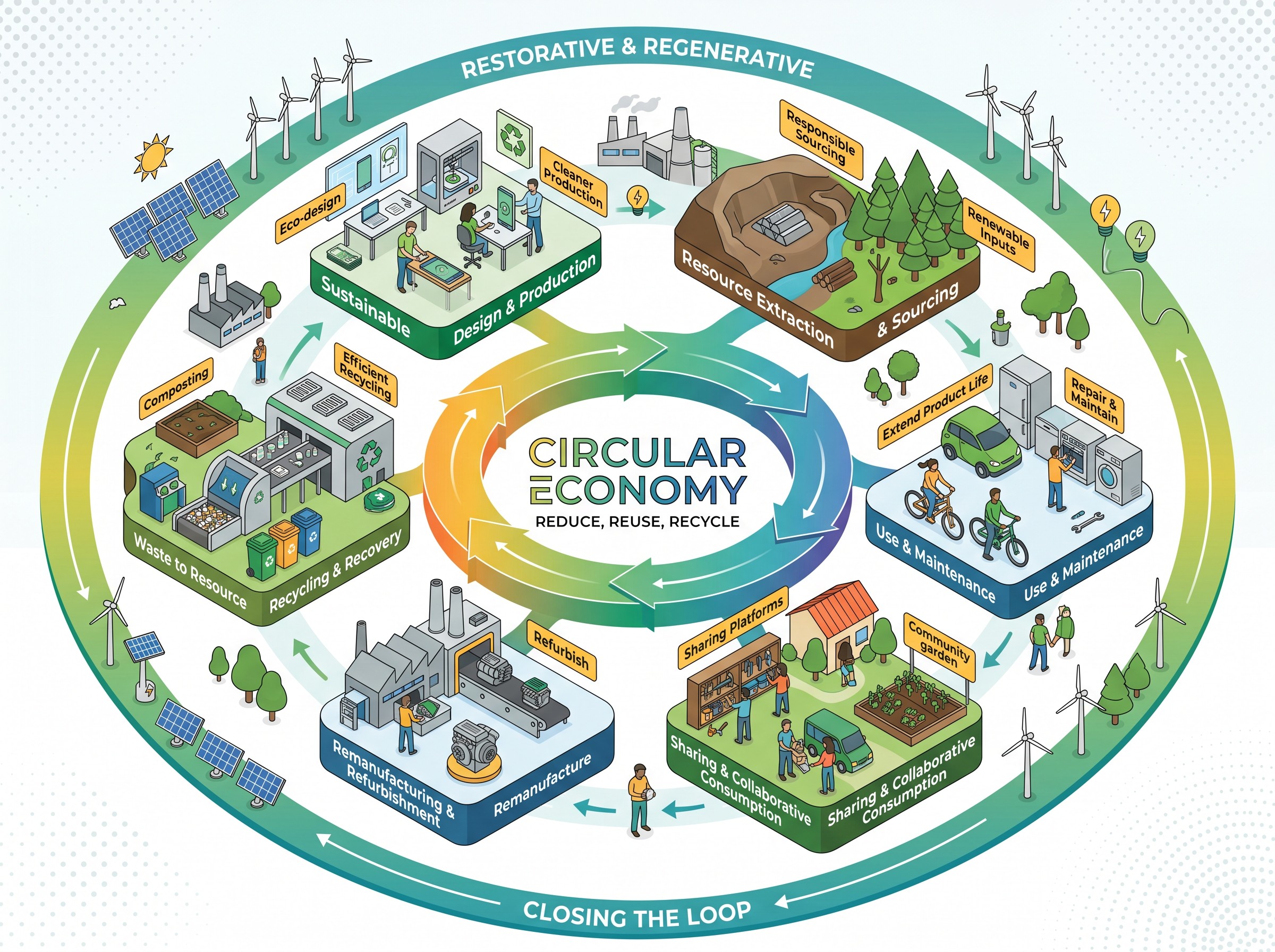
In addition, the Company has extended its sustainability concept into Circular Economy initiatives by repurposing residual materials from the Company's operations and from operators within the estate — such as plastics and other residual materials — through recycling and conversion into construction materials such as walkways, floor tiles, and landscape elements for reuse in the estate's common areas, as well as supporting surrounding communities to use them appropriately. The program not only reduces the volume of waste requiring disposal, but also adds value to residual materials, reduces virgin resource consumption, and creates collaboration among the estate, operators, and surrounding communities — concretely scaling sustainable development while reinforcing the image of the industrial estate as an innovation-driven, environmentally responsible industrial hub.
Through these innovations and programs, the Company not only elevates service quality but also builds strong, long-term relationships and trust with operators in the estate, alongside creating environmental and social value — key factors in strengthening competitiveness and shared sustainable growth.
3. Innovation Enhancing Work Efficiency
The Company has developed and applied technology and communication tools to elevate service efficiency and reduce resource consumption across all operational processes — emphasizing a comprehensive Digital Transformation to facilitate operators within the industrial estate. The Company developed electronic operating programs covering internal approval workflows and project data storage entirely online, reducing paper use, accelerating operations, and enabling systematic, transparent historical data review. Additionally, an online booking system for shared resources — such as tools or in-estate services — has been developed, allowing operators to plan usage in advance, reduce wait times, and increase the efficiency of shared resource management.
At the same time, the Company has applied safety innovation through CCTV systems covering the entire industrial estate, with data linked to a central control center for real-time surveillance and management. The system can track and record vehicle entry-exit data, analyze traffic volume to manage traffic flow more smoothly and reduce congestion within the estate, and support detection and alerts for abnormal events such as fire, flooding, or other safety incidents in a timely manner. The development of these digital solutions and intelligent systems not only enhances convenience, speed, and operator satisfaction, but also plays a key role in reducing resource use such as paper, energy, and time — leading to overall operational efficiency improvements at the estate and supporting long-term sustainable growth. Through innovation across every dimension, the Company has evolved the industrial estate from a space provider into an Industrial Ecosystem Manager — capable of efficiently connecting infrastructure, technology, and operators. This not only reduces costs and environmental impact but also strengthens competitiveness and attracts investment from target industries at the international level, forming a key foundation for long-term sustainable growth.
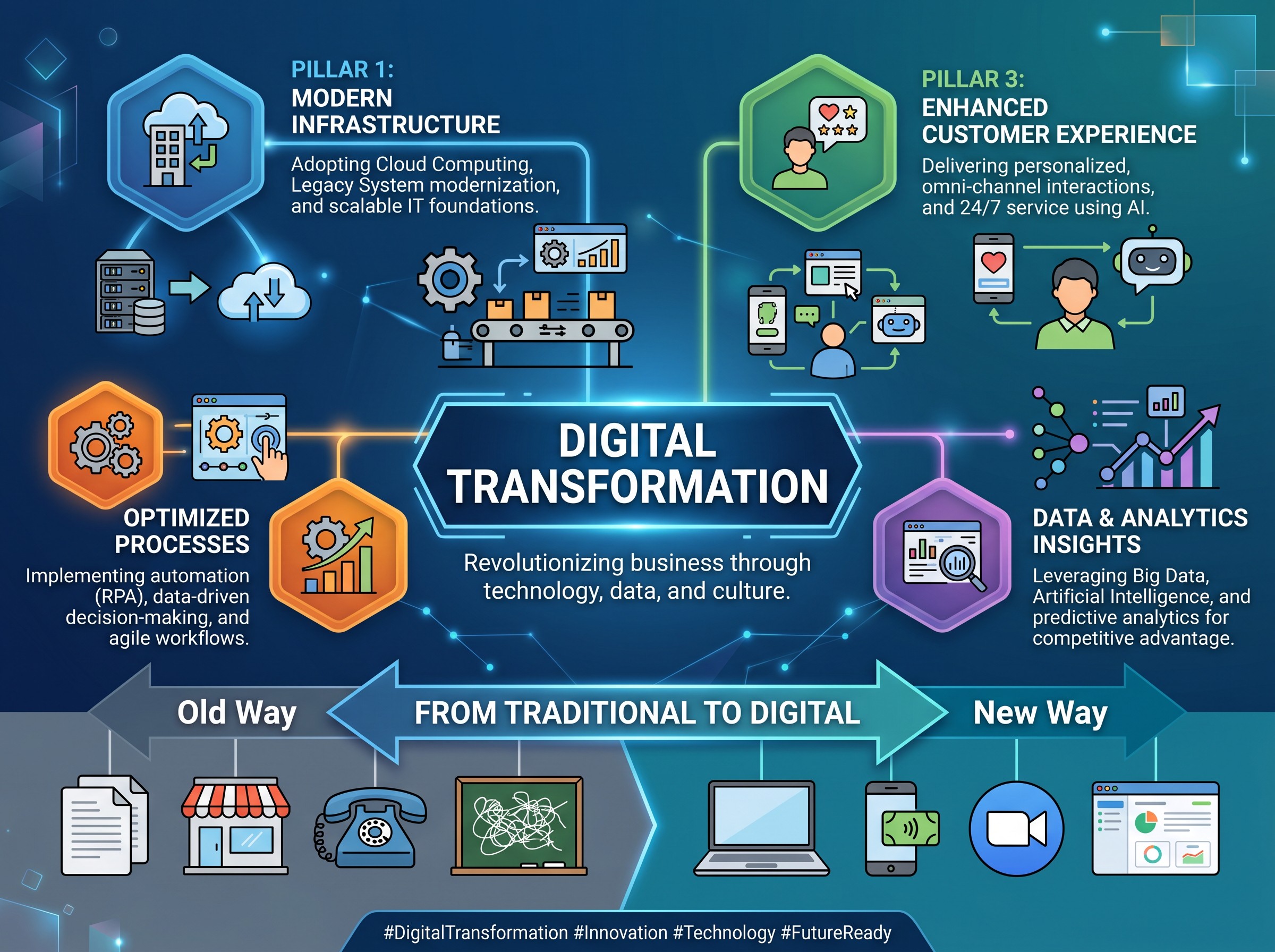
In 2025, the Company developed innovations to support more efficient organizational operations, consistent with an operational direction focused on agility, accuracy, and appropriate resource use. The aim was to improve work processes to reduce repetitive workloads, shorten processing times, and systematically support technology adoption in organizational systems. The Company developed innovations in two categories: process innovation to increase work efficiency, and technology adoption to elevate utility system management and internal organizational operations.
Process Innovation for Operational Efficiency
The Company places importance on developing process innovation to reduce repetitive workloads, shorten processing times, and enhance organizational efficiency — as well as support continuous problem resolution and operational improvement. In 2025, the Company implemented the following key innovation projects:
CRM Line OA Project
The CRM Line OA development project was created to elevate the service request reception and service delivery processes of Pinthong Industrial Estate — making them faster and more accurate — with the goal of reducing repetitive workloads, shortening inter-departmental coordination times, and enhancing service data management efficiency.
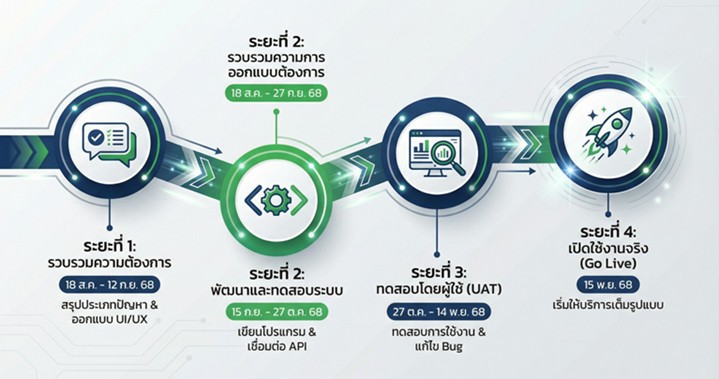
The project was implemented according to a defined step-by-step plan from August to November 2025, covering requirements gathering and system design aligned with actual usage, system development and integration with Line OA and the PIN Member database, User Acceptance Testing (UAT), through to official system launch — to ensure continuous and stable system operation.
In implementing the project, the Company placed importance on careful resource and cost management, using a total budget of 40,000 Baht for the annual Line OA subscription, with no additional development costs as internal personnel were primarily utilized. The project was driven through collaboration between the IT Department responsible for development, system administration, servers, and data security; the Customer Relations Department as the primary user and coordination center; and the Operations Department responsible for on-site problem resolution alongside performance recording. The Company also placed importance on risk analysis and management at every stage — covering technical risks from system connectivity and servers (with data backup and backup communication channels prepared), user risk (supported by manuals and staff guidance), and data security risk (managed through the PIN Member authentication system to appropriately and securely limit data access rights).
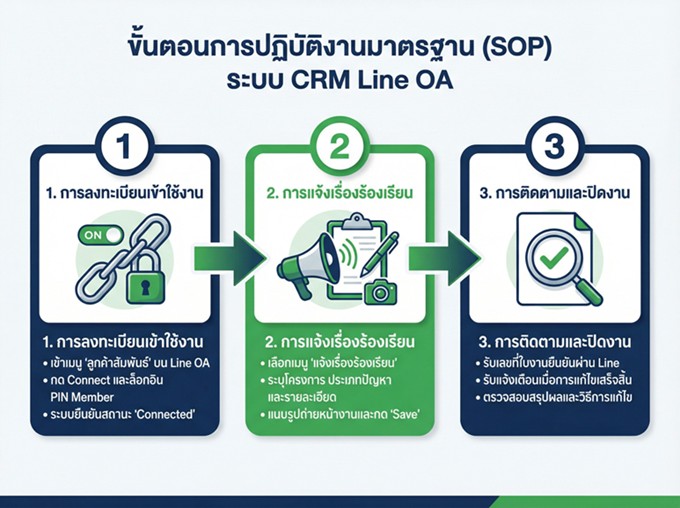
After the CRM Line OA system was deployed in actual use, the system became the primary channel for receiving and tracking service requests, resulting in faster and more systematic coordination processes — reducing time in the request reception and data recording steps by 75%.
| Process | Time via Telephone | Time via Line OA |
|---|---|---|
| Complaint reception | 10 min | 0 min |
| Data entry into system | 7 min | 0 min |
| Coordinating responsible unit | 15 min | 0 min |
| Status tracking and customer notification | 8 min | 8–10 min |
| Total | 40 min | 8–10 min |
| Time Saved | 30 min or 75% | |
At the same time, operators in Pinthong Industrial Estate accessed the system through Line OA at 85%, and connected through the PIN Member system at 92% of total factories. The system made job status tracking more transparent and auditable, and significantly reduced work slippage — earning an average user satisfaction score of 4.8 out of 5.0 — reflecting confidence in both service quality, resource management, and an organizational development approach that considers business stability alongside long-term environmental stewardship.
Online Asset Registration System Development Project
The Online Asset Registration System Development Project is a key tool for elevating the organization's asset management — moving from document-based and manual data entry to a digital system with a centralized database — enabling asset registration, data updates, and status tracking to be performed more rapidly, with unified standards, and reducing duplicate workloads of related units.
The system enhances data accuracy and reliability through automatic data verification mechanisms, reduces human operational error, and enables retrospective review of transaction histories at every step. Units can therefore systematically track asset data — in use, maintenance, transfer, and disposal — making asset control and counting more efficient.
In terms of governance, the system enhances transparency and supports both internal and external audits, while reducing the risks of asset loss, incomplete data recording, or inappropriate asset use. At the same time, systematically stored data can be analyzed for investment planning, maintenance, and asset management to maximize benefits, helping control long-term costs and enhance resource utilization efficiency.
This project therefore not only supports digital operations and paper use reduction, but is also part of elevating the organization's governance and operational efficiency — to support stable and sustainable growth in the future.
Performance Results
| Topic | Result per Item | Total Result for 2025 |
|---|---|---|
| Paper reduction | 10 sheets | 16,350 sheets |
| Reduced time for asset search and registration | 70 min | 1,965 hrs |
| Human Error in operations | 0 cases | 0 cases |
PIN IT-CARE Project
The PIN IT-CARE online system development project — covering operational approvals, data recording, meeting room bookings, and central vehicle bookings — is part of elevating organizational operations to digital systems and concretely supports paper use reduction. It transforms work processes from traditional document-based formats to electronic operations, making request submission, approval, data storage, and data retrieval more convenient, faster, and more systematic.
Adopting this system reduces printing, storage, and internal document circulation, contributing to reduced use of resources involved in document preparation — such as paper, energy, and consumables — as well as reducing document-related waste and supporting the organization's environmental and carbon reduction goals overall.
In 2025, the Company extended PIN IT-CARE development by adding an online maintenance request function to make maintenance management more agile and systematic. Employees can report issues, track status, and check work progress through a single system, while related units can plan, prioritize, and appropriately monitor operations — enabling maintenance work to be completed within defined timeframes and achieving 100% work order closure, while reducing data duplication and document loss risks.
In addition, the Company developed online functions for inventory management and office equipment requisition, making equipment use control and tracking clearer and more efficient. Employees can submit requests and track approval status through the system, while responsible units can check remaining inventory and plan procurement more appropriately — helping reduce excess storage, equipment deterioration, and document workload.
The system also supports transparent and auditable operations through systematic recording of data and operational histories at each step, enabling clear retrospective review, while also enhancing convenience in accessing information, reducing coordination steps, and elevating the overall operational efficiency of the organization.
Performance Results
| Topic | Total Result for 2025 |
|---|---|
| Paper reduction | 20,230 sheets |
| Maintenance work order closure success rate within defined timeframe | 100% |
Technology Adoption to Elevate Utility System Management
Smart Water Management with SCADA and IoT Project
The Smart Water Management Innovation Project using SCADA and IoT was created to elevate Pinthong Industrial Estate's water supply management — making it stable, efficient, and capable of continuously supporting industrial water use. The project aims to reduce water shortage risks, increase water quality control accuracy, and strengthen emergency preparedness. IoT technology was integrated with the SCADA engineering control system to transform traditional water management processes into an intelligent network system capable of integrated measurement, control, and management from source to end point — enabling systematic operations consistent with industrial estate utility standards.
The system operates through the installation of smart sensors at key points throughout the water production process to collect real-time water quantity and quality data. Data is transmitted via a cloud system to the central control center, enabling the status of all system operations to be monitored from a single screen — while also controlling chemical dosing, water filtration, and automatic filter backwashing according to pre-defined conditions. This innovation transforms maintenance from reactive problem-fixing to Preventive Maintenance — reducing losses from water system disruptions, increasing service stability, reducing unnecessary resource use, and building confidence among industrial estate operators. It is also a key mechanism for elevating efficient water resource management to support long-term industrial development.


Promoting Pinthong's Innovation Culture
The Company aims to build an organizational culture that promotes innovation and development, placing importance on developing the capabilities of personnel at all levels to have the knowledge, understanding, and attitude open to change. The Company promotes employee creativity, observant awareness of work processes, and the courage to question or propose new approaches for operational improvement. If employees identify approaches that can help solve problems, increase work efficiency, or create organizational value, they can present their ideas to relevant units for consideration of feasibility in actual implementation — opening opportunities for employees to participate in developing and improving organizational operations. The Company also supports the adoption of knowledge, technology, and innovation from external sources for operational application. Development concepts or technology adoption in some cases arise from suggestions by employees with experience in those specific areas — enabling work processes to be improved, reducing limitations of existing operations, and creating added organizational value through internal personnel participation.
In 2025, the Company continuously developed innovation and technology adoption within the organization from employee proposals — with 2 new functions arising from employee suggestions under the PIN IT-CARE project, namely: the Online Maintenance Request Program, which effectively reduced repair request time and processes; and the Online Inventory Management and Office Equipment Requisition Program, which enables monitoring of remaining equipment status, readiness for use, and reduces equipment deterioration. The Company adopted these concepts and technologies into actual operations according to the suitability of each unit, resulting in improved work processes with greater efficiency.